Latest Entries

Protected: An Attempt at Self-Consciousness

This post is password protected. To view it please enter your password below:


The Beginning of a Thought on Installation Art

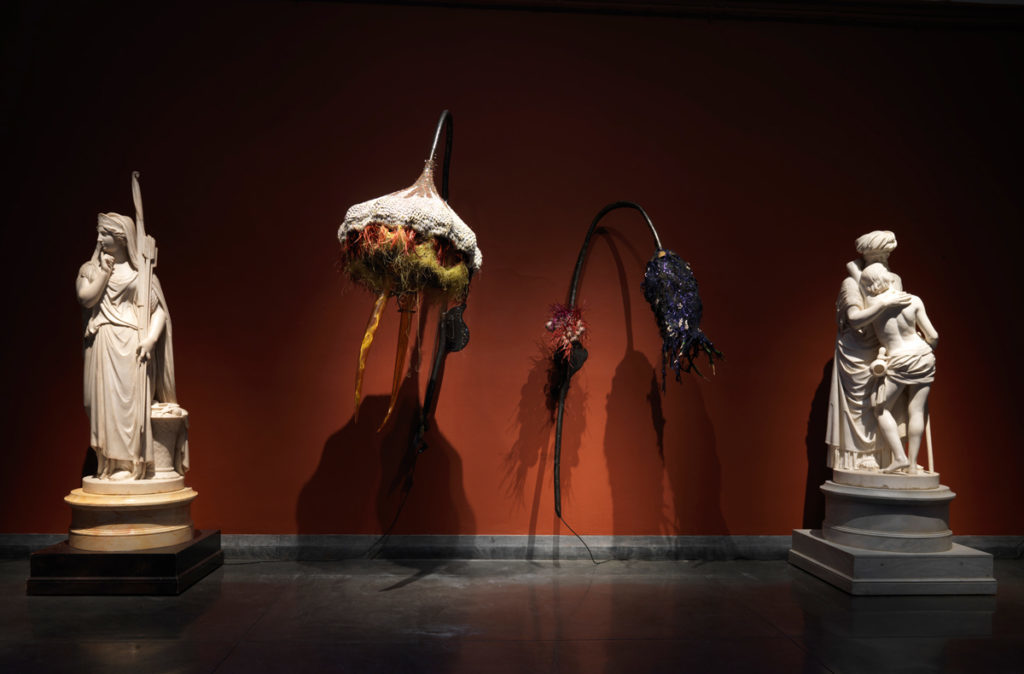
In an attempt to re-compress some of the art and literature I’ve gathered in the past few years, I’ve been slowly pinning down corners of a subject I want to pursue in my graduate work. The recurring themes in my undergraduate studies circle around the art institutional space, how it can be transformative and plastic, validating and self-critical. Within the discourses on artistic space, I find myself returning to the idea of Installation Art, which cannot be called a medium by art historical tradition, but has in the past 40 years acquired the valence of a coagulated genre, and thus slipped into art world’s vocabulary. I have noticed a discrepancy in documentation and critical perspectives on installation art relative to its high visibility in contemporary exhibitions. While museum attention implies a certain validation in artistic and cultural currency, installation art has yet to move into the discourse of art history. This might be because the genre is perceived to be relatively young, but I would guess that this is more because installation is part performative, part conceptual, and incredibly fragile.

In the handful of survey books I’ve come in contact with, I frequently return to two prominent volumes: MOCA San Diego’s Blurring the Boundaries: Installation Art 1969-1996 (1997), and Phaidon’s Vitamin 3-D: New Perspectives in Sculpture and Installation (2009). They offer competing methodologies by way of introduction to their subject. Continue reading…

The Cloisters, between Pilgrimage and Tourism

This was a miniature conference paper I gave this week. I was trying to locate the Cloisters, as both a museum and a medieval (contemporary) construction, relative to traditions of pilgrimage and tourism.

taken from the Cloisters' website

In the modern age of tourism, museums have achieved landmark status. For one who sees “everything as a sign of itself,” [1] museums are convenient concentrations of cultural artifacts employed to typify the conditions under which they were made. Fortunately for New York tourists and tour organizations, the majority of these museums are concentrated in upper-middle Manhattan. City Sites NY, a popular tour bus franchise, advertises that both their “All Around Town” and “Uptown Tour Bus” tours include visits to the Museum Mile [2], and is therefore a must. The visibility of these museums contributes to their high visitor traffic, and perpetuates their canonization in the New York tourist experience.

Excluded from these franchised museum loops is the Cloisters. This is in part due to its distance from central Manhattan: it is 5.6 miles north of its parent museum, the Metropolitan Museum of Art, whose inclusion on bus tours is almost guaranteed. The Cloisters’ absence from the museum canon may also have to do with its specialization in medieval art: its narrow focus appeals to a necessarily smaller audience. Thus, obscure enough in location and content to have eluded the double-decker’s radius of interest, the Cloisters occupies a different category of destinations working along and at odds with touristic practice. Continue reading…

Taken 3/26/11

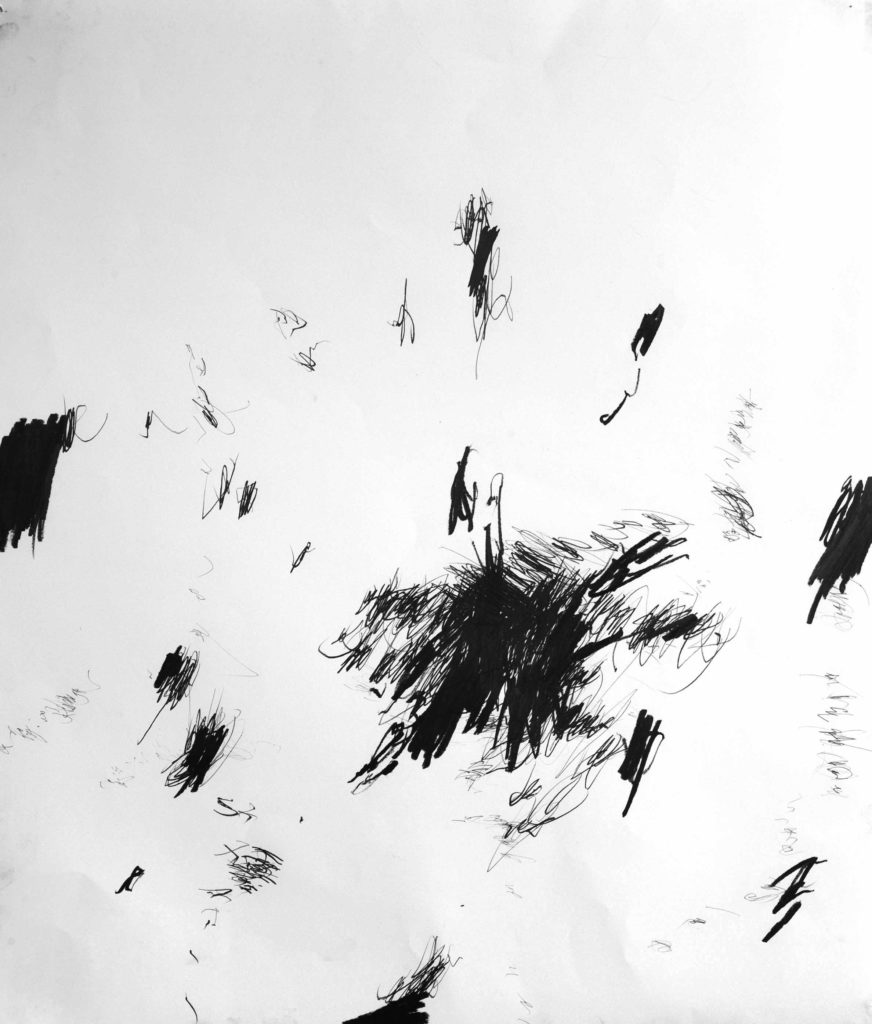
notes transcribed from a talk the artist Carolee Schneemann gave at the Nasher Museum at Duke University; she came in honor of an epistolary book our Kristine Stiles published on her, titled Correspondence Course.


–who saw the body as sculpture and as painting, and video as response to writing (for Carolee)

Continue reading…

Vogue, Vogue, Gender, Repetition, Erasure

I wrote this piece recently on Madonna’s music video “Vogue.” It was fun to write, so I thought I’d edit it and include it here.

Feathers part like curtains to announce the beginning of a performance. Figures impeccably dressed strike poses and are interspersed at intervals between objects of art. In participating in the same space as paintings and sculpture, they acquire the attributes of being visually constructed and topically determined. But, beneath surfaces, there are only more surfaces denying interiority. The figures are thus postured to be apprehended through their presentations. Their personae and their appearances inscribe themselves in each other as they are being simultaneously determined.

Continue reading…

(Re)Distributing Gawker Artists

I recently got news from Liz Dimmitt, a co-curator of Gawker Artists, that it is again expanding its already multi-faceted role in the art scene. GA recently has begun to collaborate with the art print organization society6 to make its artists’ work available to purchase in a variety of forms. Society6 is a group that shares GA’s principles and function, and this joint venture makes sense. Both are groups helping artist communities gain presence and support in the too-vast art world, by giving them a forum to display their work, and means of distributing it. Both are open for anyone to join.

GA’s most recent project is their Limited Editions, a curated selection of pieces limited to 100 printings each. It stands apart from the other shops on the site to which all artists can submit their work. GA has always been deft at operating in multiple levels of inclusion, of offering the prestige of being curatorially selected alongside a membership to an ungated network of artists. It is what gives GA’s actions a different valence than those of a now-competitor, 20×200.

Though skeptical of GA’s step towards market participation, I realize that art prints have a legacy of benefitting artists, dating back before the art market boom in the 15th century Netherlands. Prints then were a way of circulating visual ideas, of increasing the visibility of genius. It could be read in the same way now. Prints then also necessarily came in limited number, because the plates would break with repeated use. Thus the Limited Editions finds a relevance and precedence in tradition.

Take a look. If nothing else, the artists are fantastic and deserving of support.

For more information on Gawker Artists, please see my earlier piece.


Copyright © 2010 Serena Qiu. All rights reserved.

This blog is proudly powered by Wordpress and uses Modern Clix, a theme by Rodrigo Galindez. Copyright © 2004–2010. All rights reserved.